
Heart Attack Symptoms: A Complete Patient-Friendly Guide
Understanding Heart Attack Symptoms
A heart attack happens when blood flow to part of the heart is blocked or severely reduced. Your heart needs a constant supply of blood to work properly. If fatty deposits, called plaques, build up inside the arteries and one of them suddenly becomes blocked by a clot, blood can’t reach the heart muscle. Without enough oxygen, part of the heart muscle gets damaged — this is what we call a heart attack.
Another name for a heart attack is myocardial infarction (MI).
Getting help quickly is critical. The sooner treatment starts, the more heart muscle can be saved. If you or someone around you might be having a heart attack, call emergency services right away (911 or your local number).
Common Symptoms
Heart attack symptoms can feel different for each person. Some are strong and obvious, while others are mild or even silent.
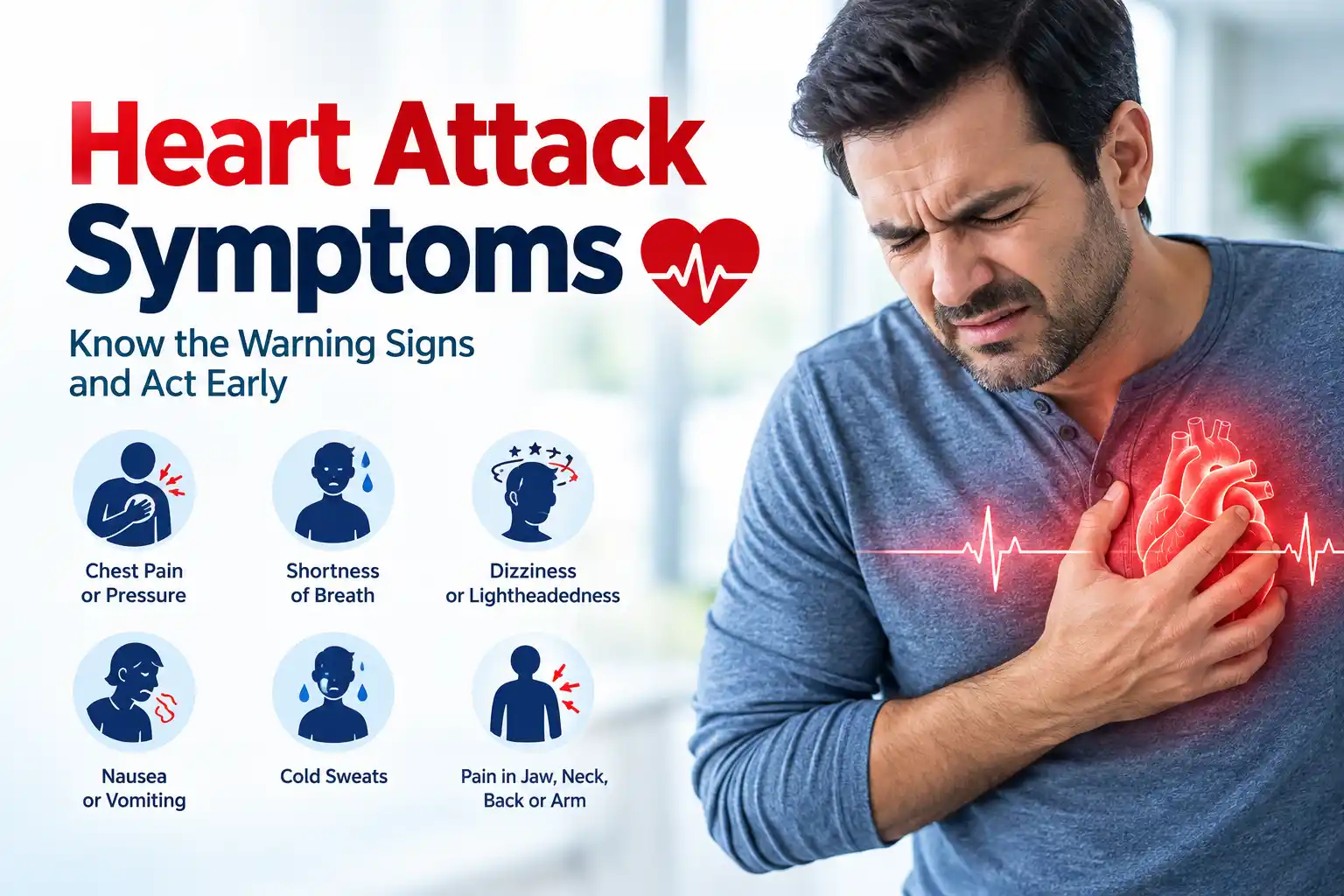
The most common warning signs include:
- Chest pain or discomfort – feels like squeezing, tightness, pressure, or aching
- Pain that spreads to the shoulder, arm, back, neck, jaw, or even the stomach
- Shortness of breath – with or without chest pain
- Cold sweats
- Nausea or vomiting
- Lightheadedness or sudden dizziness
- Extreme tiredness
⚠️ Women may have slightly different symptoms, such as sharp pain in the neck, jaw, or back, or unusual fatigue. Sometimes, the first sign may even be a sudden cardiac arrest.
When to Call a Doctor or Emergency Help
Don’t wait. If you think you’re having a heart attack:
- Call 911 (or your local emergency number) immediately.
- Take nitroglycerin if your doctor has prescribed it, as directed.
- Take aspirin only if advised by emergency personnel or your doctor (don’t delay calling for help).
What to Do if Someone Nearby Has a Heart Attack
If someone collapses and isn’t breathing:
- Call for help right away.
- Start CPR (push hard and fast in the center of the chest — about 100–120 times per minute).
- If trained, alternate 30 chest compressions with 2 rescue breaths.
- Use an AED (automated external defibrillator) if available.
What Causes a Heart Attack?
Most heart attacks are caused by coronary artery disease (CAD), which happens when cholesterol and fat form plaques in the arteries that supply blood to the heart. If a plaque ruptures, it can form a clot that blocks blood flow.
But heart attacks can also be triggered by other issues:
- Coronary artery spasm (sudden tightening of the artery)
- Certain infections (such as COVID-19) that damage the heart muscle
- A tear in the heart’s artery wall (spontaneous coronary artery dissection)
Risk Factors You Should Know
Some things raise your chances of having a heart attack. These include:
- Age (men over 45, women over 55)
- Smoking or exposure to secondhand smoke
- High blood pressure
- High cholesterol or triglycerides
- Diabetes
- Lack of exercise
- Unhealthy diet (high in sugar, salt, fried or processed foods)
- High stress levels
- Family history of early heart attacks
- Certain conditions (like preeclampsia and autoimmune diseases)
- Drug use (cocaine, amphetamines)
Possible Complications After a Heart Attack
Heart attacks can lead to other problems if the heart muscle is badly damaged:
- Abnormal heart rhythms (arrhythmias)
- Heart failure (weakened pumping ability)
- Cardiogenic shock (sudden severe pumping failure)
- Inflammation around the heart (pericarditis)
- Cardiac arrest (sudden stopping of the heart)
Prevention: Protecting Your Heart
The good news is, there’s a lot you can do to lower your risk of heart attacks:
- Quit smoking (or don’t start)
- Eat heart-healthy foods – more fruits, vegetables, whole grains, lean proteins, and healthy fats.
- Exercise regularly – at least 30 minutes most days
- Maintain a healthy weight
- Control conditions like high blood pressure, diabetes, and cholesterol with your doctor’s guidance
- Manage stress with relaxation techniques, yoga, or mindfulness
- Take your medications as prescribed
- Learn CPR so you can help others in an emergency
Key Takeaway
A heart attack is a serious medical emergency, but quick action saves lives. Learn the warning signs, call for help immediately, and make healthy lifestyle choices to protect your heart every day.
Ashwagandha Benefits for Women
Ashwagandha, an ancient herb renowned in Ayurvedic medicine, offers numerous benefits for women. This adaptogen helps reduce stress and anxiety by regulating cortisol levels, promoting a sense of calm and well-being. Ashwagandha also supports hormonal balance, which can alleviate symptoms of menopause and PMS. Additionally, it enhances energy levels and boosts overall vitality, making it easier for women to maintain an active lifestyle. For those seeking improved sleep quality, Ashwagandha benefits include its ability to promote relaxation and a restful night’s sleep. Integrating Ashwagandha into your routine can be a powerful step towards optimal health and wellness.




[…] heart attack symptoms is crucial for early intervention and treatment. Common symptoms include chest pain or discomfort, […]